Trends in Food Science and Emerging Technologies | TFoSET-2026
November 25-27, 2026 |
Prague, Czech Republic
We are thrilled to invite researchers, innovators, and industry leaders to submit
abstracts for oral and poster presentations at the Trends in Food Science and Emerging
Technologies – an international conference, organized by Impact Research Communications.
Join us in Prague, Czech Republic, from November 25–27, 2026, to shape the future of
food science through dynamic presentations and global collaboration.
This 3-day conference will bring together the global food researcher's community, where chemists,
analysts, technologists, scientists, investigators, and young researchers gather to share cutting-edge
research and innovations in food science and technology.
This landmark event will explore cutting-edge advancements across pivotal themes:
- Advanced Food Chemistry & Functional Ingredients
- Sustainable Food Systems & Safety Innovations
- Next-Gen Food Technologies & Smart Manufacturing
- Sensory Science & Experiential Food Design
- Nutrition, Health & Personalized Food Solutions
- Food Structure, Texture & Physical Dynamics
- Traditional & Novel Food Processing Techniques
- Computational Food Modeling & Predictive Analytics
- Smart Food Contact Materials & Hygiene Engineering
Your oral presentations and posters will spark lively discussions and foster collaborations in
this vibrant international forum.
Discover Prague's Magic:
Nestled along the Vltava River, this "City of a Hundred Spires" blends medieval majesty with
Renaissance splendor. Marvel at Prague Castle—the world's largest ancient castle complex—wander
the iconic Charles Bridge with its 30 statues, and gaze at the Astronomical Clock's 600-year-old
mechanical dance. Savor must-try Czech flavors like trdelník (chimney cake), hearty svíčková
(marinated beef with creamy sauce), and crisp pilsner beer in historic taverns. Prague's fusion of
history, innovation, and culinary charm makes it the perfect stage for our conference.
We eagerly await your groundbreaking contributions!
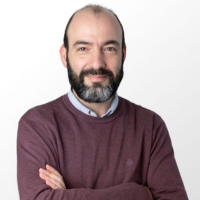
Antonio Derossi
University of Foggia, Italy
Biography
+
Antonio Derossi is Associate Professor in Food Science and Technology at Dept. Science of
Agriculture, Food and Environment, University of Foggia, Italy. Antonio Derossi is member of
the Emerging Technologies and Food Formula Lab (ETFF). His work is dedicated to the boundaries
of food manufacturing by discovering, optimizing and implementing new technologies capable of
renewing the human-food interaction and delivering nutritionally and sensorially customized food
products for a healthy and sustainable diet.
Latest research topics regards the use of additive manufacturing of food providing new digital
abilities for engineered food products and the exploitation of the full potential of robotic
technology in the unit operation of food. Antonio Derossi is associate editor of the journal
Future Food (Elsevier), he serves as external expert at the European Commission for the evaluation
of the research project submitted under the Horizon Europe, was invited at FAO to work on the report.
He chaired the international conference in Food Chemistry and Technology, FCT, in 2022 and 2023, and
is a member of the Scientific Committee of the Int. Conference of Future Food which will be held in
Singapore 2025. Antonio Derossi is author of more than 100 scientific publications, 9 book chapters
and more than 20 oral presentations as invited speaker and oral presentation at International Conference.
Also, his works received more than 5,000 citations and he reached h-index of 42 as of Feb-2026.
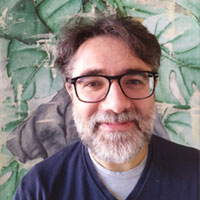
Giuseppe Spano
University of Foggia, Italy
Biography
+
Prof. Giuseppe Spano is a full professor in industrial microbiology, food microbiology
and recombinant DNA technology at the University of Foggia. He holds a PhD in Plant
Biotechnology from University of Bristol and a PhD in Food Microbiology from University
of Foggia.
He has held visiting researcher positions at renowned international institutions:
University of Bordeaux, Catholic University of Louvain, ENSBANA-DIJON and University
of Turku. He supervised many PhD students and was a member of numerous international
steering PhD committees, also acted as an evaluator of research projects for many
national and international agencies.
Prof. Spano has been coordinator of over 40 scientific projects and has been an author
on more than 400 scientific papers including book chapters and patents, which have been
cited over 11,000 and his h-index is 61. He currently acts as Editor in chief of Food
Bioscience. Prof. Spano is co-founder and scientific consultant of a spin-off company
Promis Biotech srl.
His research is oriented towards biotechnologically significant innovations based on
lactic acid bacteria focusing on vitamins production and antifungal and antibacterial
activities.
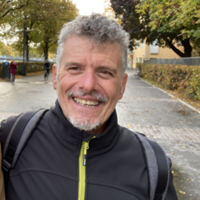
Lucia Segui
Universitat Politècnica de València, Spain
Biography
+
Lucía Seguí is an Agri-Food Engineer with a PhD in Food Science and Technology. She serves
as an Associate Professor at the Universitat Politècnica de València, where she teaches courses
on Food and Biotechnological Processes. Dr. Seguí is also a researcher at the Institute of Food
Engineering–FoodUPV, focusing her work on sustainable processing technologies for the
valorization of fruit and vegetable residues and discards generated by the food industry.
Her research emphasizes the development of upcycled products as functional ingredients for
innovative food applications.
Dr. Seguí specializes in exploring biological and thermophysical pretreatments—including microwaves,
ultrasounds, fermentation, and their combinations—alongside drying technologies to produce powdered
ingredients with enhanced biological activity. Her work also investigates the impact of these processes
on the functional, technological, and response to in-vitro digestion properties of the resulting
bio-products and ingredients. Additionally, she collaborates with other research groups to further
advance the applications of upcycled products within the agri-food sector.
Over the course of her career, Dr. Seguí has contributed to 25 competitive research projects,
leading 7 as the principal investigator. She has 50 publications in high-impact scientific
journals and several book chapters with renowned publishers.
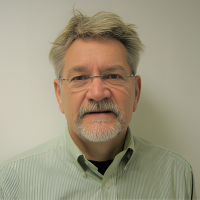
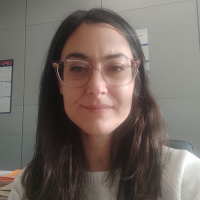
Alain LE-BAIL
ONIRIS GEPEA CNRS 6144 Nantes, France
Biography
+
Prof. Alain Le-Bail earned his PhD in Heat Transfer and Fluid Dynamics from the University
of Nantes in 1990 and serves as Professor at ONIRIS VetAgro-Bio in Nantes (www.oniris-nantes.fr),
where his teaching and research in UMR GEPEA (Process Engineering applied to Food science and
Environment, affiliated with CNRS) focus on heat transfer, phase change in food systems, the
impact of processing on food structure and functionality—emphasizing physics of interfaces under
external fields (electric, microwave, ultrasound) and gas interactions during preparation—with
applications in baking technology and refrigeration.
He has supervised over 40 PhDs, authored more than 250 peer-reviewed papers, 24 book chapters,
and co-authored 11 patents (H-Index 50 WoS, 70 invited lectures/keynotes; ORCID: 0000-0001-6132-5392).
Prof. Alain Le-Bail was also Past President of IAEF (2019-2023), current President of IIR-IIF Commission
C2 (Food Science and Engineering, 2019-2027; https://iifiir.org/en/commission-c2), current Co-Editor-in-Chief
of Innovative Food Science and Emerging Technologies (Elsevier), Editor of International Journal of Food
Properties (Taylor & Francis), and serves on the Editorial Boards of Journal of Food Engineering, Food
Chemistry Advances, and Applied Food Research (all Elsevier).
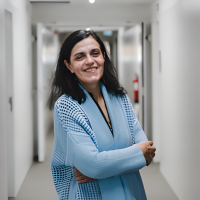
Cristina L.M. Silva
Universidade Católica Portuguesa (ESB-UCP), Portugal
Biography
+
Cristina L.M. Silva is an Associate Professor at the School of Biotechnology of the Universidade
Católica Portuguesa (ESB-UCP) and leads the Laboratory of Food Engineering and Packaging at the
Centre for Biotechnology and Fine Chemistry(CBQF). With a Ph.D. in Biotechnology, her expertise
lies in food processing, process optimization, predictive microbiology, and food quality and safety.
She has played a pivotal role in shaping food engineering education, currently coordinating the
Master’s in Food Engineering at ESB-UCP and overseeing internationalization and 3rd cycle degrees.
Cristina Silva has coordinated several national and international research projects and actively
collaborates with industry, academia, and policymakers on sustainability and innovation in food systems.
At the international level, she serves as a Councillor for the International Academy of Food Science
and Technology (IAFoST) (2024-2026) and chairs the IUFoST Oversight Group on Education, working to
advance global strategies for food science and engineering education.
She is a Fellow of IAFoST and a member of the advisory committee of ISEKI-Food, contributing to knowledge
transfer and capacity building in food science. Cristina Silva is also an Associate Editor of multiple
international journals and a recognized expert in food engineering.
Ricardo N. Pereira
CEB, University of Minho, Portugal
Biography
+
Ricardo Nuno Correia Pereira holds a PhD in Chemical and Biological Engineering from the University
of Minho (2011), Portugal. He has developed recognised expertise in the effects of electric fields
and ohmic heating on the structure and functionality of biomolecules.
He has published more than 100 papers in peer-reviewed journals and was recently recognised by Stanford
University and Elsevier among the World’s Top 2% Scientists (2025).
He is currently a tenured Assistant Researcher at the Centre of Biological Engineering, University of Minho
(Portugal), Member of the General Council of the University of Minho, and Executive Coordinator of
Competitive Agrifood Systems at Conference of Rectors of the Universities of Southwest Europe (CRUSOE).
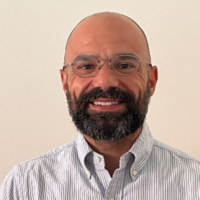
Paolo D'Incecco
University of Milan, Italy
Biography
+
Paolo D’Incecco is an Associate Professor in the Department of Food, Environmental and
Nutritional Sciences at the State University of Milan (Italy). He earned his PhD in Food
Systems in 2017, including research periods at the University of Melbourne (Australia) and
the Max Rubner Institute in Kiel (Germany).
His teaching activities focus on Dairy science and technology and Advanced microscopy techniques.
His research interests concern the chemical and technological aspects of milk and dairy products,
with particular emphasis on the processing–structure–quality relationship and the valorization of
dairy by-products. He has authored over 50 articles in international peer-reviewed journals and
three book chapters and has presented his research at more than 20 international conferences.
He is a member of the PhD Board in Food Systems at
the University of Milan. He is a member of the Scientific Committee of the Grana Padano
PDO Consortium, participates in working groups of the International Dairy Federation
(IDF), and is a board member of the Italian Association of Dairy Technicians (Associazione
Italiana Tecnici del Latte).

Joanna Harasym
Wrocław University of Economics and Business, Poland
Biography
+
Prof. Joanna Harasym is a Full Professor and Head of the Department of Biotechnology and
Food Analysis at the Faculty of Production Engineering, Wrocław University of Economics and
Business (WUEB), Poland, where she also serves as the Founder Director of the Adaptive Food
Systems Accelerator Research Centre. She holds a Doctor of Science in Food Technology and
Nutrition and is a certified Patent Attorney (Polish Chamber of Patent Attorneys, 2012–2017).
With over 30 years of experience in food technology and biotechnology, Prof. Harasym has held
international research positions, including a prestigious Marie Skłodowska-Curie Individual
Fellowship at the University of Valladolid, Spain (2016–2018), advancing research in rheology
and food materials science.
She has supervised 36 MSc theses and multiple PhD candidates and has hosted over 50 international research
fellows at WUEB. Prof. Harasym has authored more than 200 scientific publications, including peer-reviewed
articles, book chapters, and patents, which have been cited over 2,500 times (H-index 28). She has led or
co-investigated 38 funded research projects with a grant success rate exceeding 70% and has established over
40 active industry collaborations across Europe focused on R&D, technology transfer, and product
innovation. She invented OATin Technology® for the extraction of oat beta-glucan, which has been
commercialised for veterinary applications.
She serves as an Independent Expert for the European Commission, FCT Portugal, Polish Ministry of Science
and Higher Education, COST Actions, NCBR Poland, and PARP Poland, and as an Independent Consultant at B+R
Consulting. Her professional affiliations include membership in the Institute of Food Technologists (IFT),
the ISEKI-Food Association, ASIFF, and AACC International. She held institutional leadership roles as an
elected member of the Senate and the Doctoral School Council at WUEB.
Her research focuses on functional foods, bioactive compound extraction (particularly oat beta-glucans),
sustainable food systems, innovative processing technologies, including static magnetic field, 3D food
printing, mild extrusion and the valorisation of agricultural by-products. Current work includes digital
twin models for fermentation processes, novel protein sources, and circular economy approaches in food
processing.
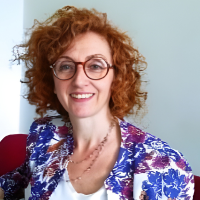
Katia Liburdi
DAFNE, Tuscia University, Italy
Biography
+
Katia Liburdi has been Associate Professor of Food Science and Technology at the Department
of Agricultural and Forestry Sciences (DAFNE), University of Tuscia (Italy), since December 2021.
She teaches Food Technology in the Bachelor’s and Master’s degree programmes in Agricultural Sciences.
She has carried out research activities abroad at the University of Debrecen (Hungary), University College
Cork (Ireland), and the University of Agricultural Sciences and Veterinary Medicine (USAMV, Romania). Over
the years, she has actively participated in several international scientific conferences, including FCT
2022–2023 and AGRIMEET 2023, and has been invited as a speaker at the forthcoming FIFS & ISNFF 2024 in Wuxi,
China. She has also contributed to the organization of major scientific events, serving on the organizing
committees of WSEFST 2024 (London), GSFST 2023 (Rome), and other international summits in the field of food
science. Her research focuses on the application of enzymes, both in free and immobilised forms, in different
food processing systems.
The results of her work have been published in 50 peer-reviewed scientific journals (Scopus ID: 14016315000;
Web of Science: R-8222-2018; ORCID: 0000-0002-3175-5364). From 2019 to 2023, she served as Associate Editor
of Food Bioscience and currently sits on the Editorial Boards of Food Bioscience, Foods, and Acta
Alimentaria.